What an MCP server is, and why it matters
The Model Context Protocol is the standard way to connect an AI assistant to business tools and data. What it means in practice, and how to plan your first connections without mistakes.
Adoption · 3 min read
Bringing an AI assistant into everyday work is not just a technology question. Use cases, permissions, sources, training and governance rules: where to start and what to avoid.
Many artificial intelligence projects start from the technology: there is a new tool, and people look for somewhere to use it. The projects that succeed usually work the other way around, starting from the questions people ask every day that currently take too long to answer.
A good exercise is to ask a few departments to note down, for a week, the information they had to look for, where they found it and how difficult it was. This list brings out the first concrete use cases, with value that the people involved can immediately recognize.
Among the use cases that emerge, pick the first ones on two criteria: the benefit to people and the simplicity of the sources. A keenly felt need that requires connecting just one system is a better starting point than an ambitious project that depends on ten integrations.
Choosing the first use cases
An assistant only answers well if it draws on the right sources. Before switching it on, make clear which systems and document archives it should consult, and which versions of documents are the valid ones. An archive full of drafts and outdated copies will produce uncertain answers.
Permissions are just as important. The assistant must see only what the person using it can see. If a salesperson has no access to HR data in the management software, they must not be able to get to it by asking the AI either. This is the simplest way to stop the tool from becoming a confidentiality problem.
Answers should always cite their source. An answer with a link to the document or record can be checked in an instant, and it gets people used to treating AI as a starting point, not as the unquestionable truth.
The assistant should see only what the person using it can see.
An AI assistant changes the way people work, and they need time to trust it. Start with a motivated pilot group, gather their feedback, refine the instructions and sources, and only then roll the tool out more widely.
Training is essential. What’s needed is not a technical course but a clear explanation of what the assistant can do, where it can go wrong, how to verify an answer and when it is better to ask a colleague. The EU AI Act also stresses the importance of adequate AI literacy among those who use these tools.
A few written rules prevent a lot of problems: which data the assistant may process and with which models, who can activate new connections, which operations require confirmation, and who reviews the request log and how often. Where personal data is involved, these choices should be assessed together with your privacy lead, in line with the GDPR.
The request log is not just a control tool. Reviewing it regularly reveals the questions the assistant answers poorly, the sources that are missing and the processes that could be automated.
Finally, decide how to measure success without chasing abstract numbers: people use the tool consistently, answers are checked and considered reliable, and the departments involved ask to extend it to other activities.
The approach that works best proceeds in stages: first read-only questions, then preparing documents and drafts, and finally automation with confirmation. Each stage builds the trust needed for the next.
Innovaq’s AI assistant is built for this journey. It works on data from across the suite while respecting each user’s permissions, cites its sources, connects to external systems via MCP servers and APIs, and logs every request. Automation always follows the principle that the AI prepares and the user confirms.
Keep reading
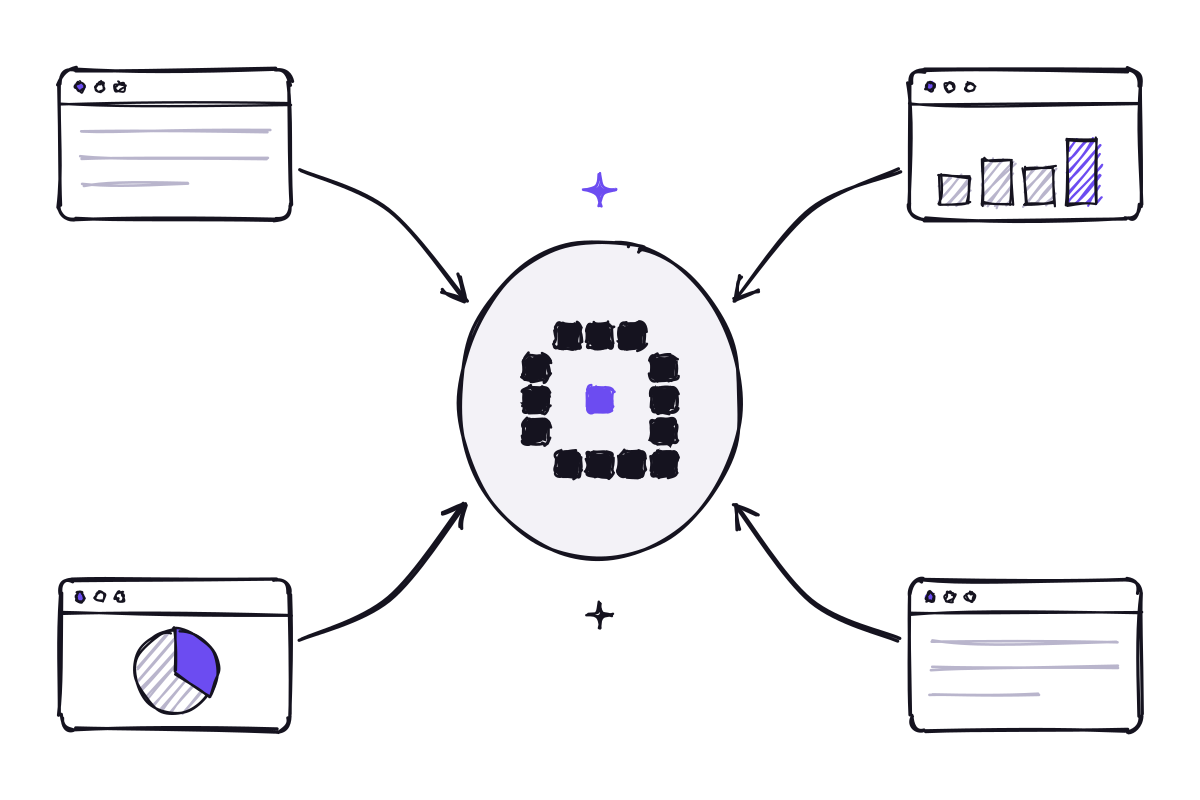
The Model Context Protocol is the standard way to connect an AI assistant to business tools and data. What it means in practice, and how to plan your first connections without mistakes.

Off-the-shelf models are ready to use and powerful; a dedicated AI knows your company’s language better. How to choose, and why the best answer is often a combination of the two.
Innovaq is a company in its launch phase.